

Designing a Landscape That Works for All Seasons in Southern Ontario
Do you find that your outdoor space only shines in the summer but sits unused or dull for the rest of the year? Many homeowners in Ontario struggle with yards that flourish in warm months only to become drab, inaccessible, or high-maintenance during fall and winter. It’s frustrating to pour effort into a garden that autumn leaves smother or winter snowburies, leaving you with a barren view and seasonal chores instead of enjoyment.
The cycle can feel endless; vibrant blooms and backyard barbeques fade into raking, shovelling, and watching plants wither in the cold. Ontario’s harsh winters and messy shoulder seasons often mean saying goodbye to your lovely landscape for half the year. This reality is discouraging and can make you feel like your investment in landscaping is only temporary, constantly at the mercy of extreme heat, frost, and everything in between.
Fortunately, it doesn’t have to be this way. With thoughtful planning and design, you can create an all-season landscape that remains beautiful and functional throughout spring, summer, fall, and winter. Imagine enjoying a yard that offers colourful plant interest in autumn, structural beauty in a snowy winter, and inviting spaces year-round.
In this blog, we’ll explore how to achieve just that. You’ll discover practical tips for all-season landscaping in Ontario, including what to consider for fall and winter, and how features like hardscaping and lighting can help you make the most of your outdoor space every month of the year.
What Is All-Season Landscaping in Ontario?
All-season landscaping involves planning your outdoor environment to be both attractive and functional throughout all four seasons, particularly in a climate like Ontario’s. Instead of focusing only on summer blooms or green lawns, this approach considers seasonal changes from the start. The goal is a yard that doesn’t “close for the season” when temperatures drop or rise, but provides enjoyment and curb appeal year-round.
All-season landscaping in Ontario typically involves using a mix of hardy plants, structural elements, and smart design choices that can withstand snow, fall debris, spring mud, and summer heat. It’s about balance: combining evergreens and winter-friendly plants with those that peak in warmer seasons, integrating hardscapes (such as patios and paths) that look good even when gardens are dormant, and adding features like lighting or shelters to extend the usability of the space.
In short, it’s a strategy to make sure your yard always has something to offer – whether it’s the bright fall foliage of a serviceberry tree, the red berries on a holly bush against winter snow, or a well-lit path to a fire pit on a crisp evening. By designing with all seasons in mind, Ontario homeowners can avoid the stark “off-season” feel and truly maximize their outdoor living all year round.
What Should You Consider For Fall & Winter Landscaping?

Ontario’s fall and winter bring specific challenges and opportunities for your landscape. Planning ahead for these colder seasons ensures your yard remains safe, low-maintenance, and visually appealing even when the temperature drops. Here are a few key considerations for fall and winter landscaping:
Fall Cleanup & Prep
Autumn in Ontario means leaves, and lots of them.
Plan for easy leaf management by incorporating spaces to collect or compost leaves and choosing deciduous trees wisely (considering size and placement).
Fall is also the time to cut back perennials, edge the lawn, and do a final garden clean-up, so your property enters winter neat and prepared. Clearing debris in the fall not only looks better, but also prevents mould or pests from setting in over winter.
Protecting Plants
Many plants need extra care to survive Canadian winters.
Use mulch in your garden beds during fall to insulate roots against frost. Consider using burlap wraps or screens to shield delicate shrubs and young trees from drying winds and heavy snow.
When designing your garden, include hardy native plants known for winter endurance and structure (like evergreen shrubs or ornamental grasses that stand tall and add texture even when covered in snow).
Snow & Ice Planning
Consider snow removal and drainage when designing paths, driveways, and planting areas to ensure optimal functionality.
Choose a practical layout that allows for space to pile snow without damaging your plants or blocking important areas. For example, leave a buffer between hedges and driveways for snow storage. Opt for paving materials and driveway finishes that are durable and resistant to damage from salting or the freeze-thaw cycle.
Also, consider using salt-tolerant plants near sidewalks and road edges where de-icing salt might splash.
Winter Interest
A common complaint is that yards look barren in winter. To avoid this, intentionally add winter interest to your landscape. This could mean planting evergreens for year-round greenery, incorporating trees or shrubs with colourful bark or berries (like red osier dogwood or winterberry holly), or even installing garden art, bird feeders, or structures that become focal points in a snowy scene.
These elements provide a pleasant visual experience during the long winter months.
By addressing fall clean-up needs and winter challenges in your landscape design, you’ll ensure that your property isn’t just an afterthought once summer is over. Instead, it will be safer, easier to manage, and more enjoyable to view throughout the colder seasons.
How Can Hardscaping & Lighting Support Year-Round Use?

Even when plants go dormant and the weather gets chilly, your outdoor space can still be inviting. Hardscaping (non-living design elements, such as patios, walkways, walls, and other structures) and lighting play a significant role in creating a yard that you can use and appreciate in every season.
By investing in the right materials and design features, you ensure that your landscape’s beauty and functionality don’t fade with the summer sun.
Here’s how different aspects of hardscaping and lighting contribute to a year-round yard:
Durable Materials
When building patios, paths, or decks for an all-season landscape, choose materials that can withstand Ontario’s extreme weather conditions.
Durable materials, such as natural stone, interlocking pavers, or concrete specifically designed for cold climates, will withstand freeze-thaw cycles without cracking or shifting. Avoid surfaces that become dangerously slippery with ice, such as textured pavers or brushed concrete, which offer better grip in wet or frosty conditions than smooth tiles.
Also consider the colour and finish of hardscape materials: lighter colours won’t absorb as much heat in summer, and a slightly rough or matte finish can provide traction in winter. By using high-quality, weather-resistant materials, your investment in hardscaping will endure year after year, requiring less repair and maintaining its appearance throughout all seasons.
Seasonal Lighting
As days get shorter, especially in late fall and winter, thoughtful landscape lighting lets you continue enjoying your outdoor areas. Lighting isn’t just for summer parties; it can make a winter yard come alive on a dark December evening.
Consider installing a mix of functional and ambient lighting to create a well-lit space. This includes path lights for safety along walkways, step lights on stairs, and overhead or wall-mounted lights in key areas, such as entryways or patios. Then add accent lighting to highlight features that look beautiful year-round – for example, uplighting an interesting tree trunk or illuminating an elegant stone wall.
Use warm-toned LED bulbs to create a cozy glow in the cold months. You might even incorporate smart timers or sensors, so lights come on automatically at dusk. Seasonal lighting extends the usability of your yard (imagine a well-lit hot tub or seating area on a winter night). Also, it adds a magical atmosphere when everything is covered in snow.
Safe & Practical Layout
A practical layout is essential for year-round use of your landscape. This means designing with all seasons of activities and maintenance in mind.
Ensure pathways are direct and wide enough for a snowblower or shovel, so you can keep them clear in winter. Position features like fire pits or hot tubs in accessible spots that can be reached even after heavy snowfall (for instance, a patio right off the back door is easier to get to in January than one at the far end of the yard).
Think about drainage and grading when placing hardscapes; water should runoff away from seating areas and paths to prevent ice build-up. It’s also wise to include some covered or sheltered spaces like a pergola with a movable canopy, or an overhang, so there is a spot to relax outside during rain or intense sun. By prioritizing safety and convenience in your layout, you make it feasible to use the space comfortably throughout the year.
Visual Interest
Hardscaping and lighting aren’t only about utility; they also provide visual interest during off-season months when plants may not be at their showiest.
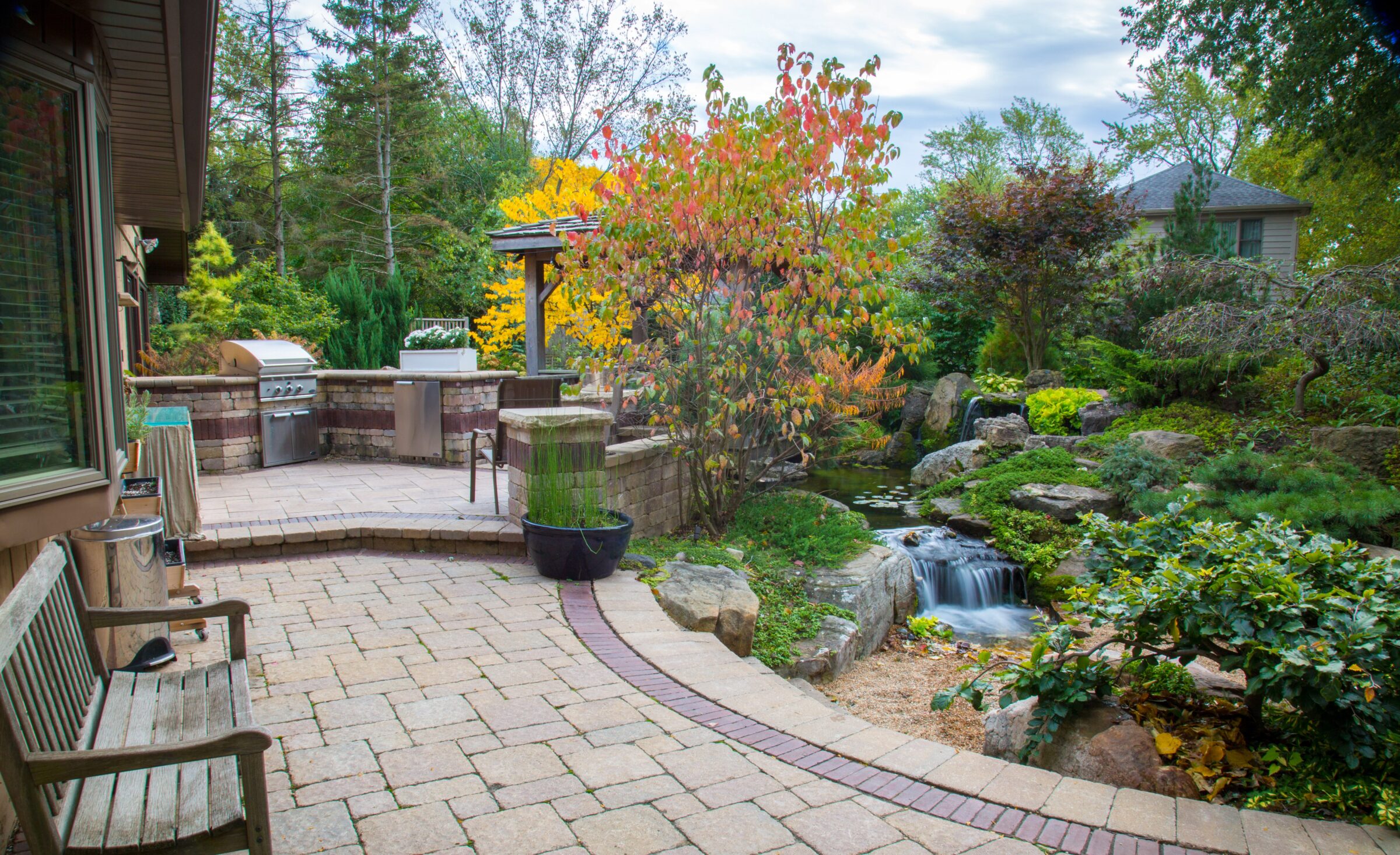
A well-designed stone pathway, an artful retaining wall, or a pergola can serve as an attractive focal point even in winter when flower beds lie empty. Consider incorporating a variety of textures and forms: for example, the clean lines of a wooden arbor, the rustic surface of a natural rock boulder, or the modern look of a sculpture. These elements stand out when blanketed by snow or lit up on a fall evening, giving your yard character and depth.
Lighting further enhances this interest: imagine string lights under a covered porch adding charm in winter, or spotlights casting shadows from a bare tree’s branches onto the snow. By combining structures with lighting, you create a dynamic landscape scene that changes with the seasons but never feels boring. Even on the bleakest February day, you’ll have interesting shapes, shadows, and forms to catch the eye.
All-Season Landscaping Success: Why Local Expertise Matters
Every region has its quirks, and Ontario is no exception. That’s why having local landscaping expertise on your side is so valuable when aiming for year-round outdoor beauty. Local professionals understand the microclimates in your area, how one part of your yard might get more sun or shade, or how the soil in your neighbourhood handles heavy rain. They use this knowledge to tailor a design that keeps your plants healthy and your hardscapes strong through every season. Perhaps most importantly, a good local landscaper will listen to your needs and involve you throughout the design. You can be part of the build process, ensuring the final result is a space you’ll love in spring, summer, fall, and winter alike, offering you a truly all-season landscaping Ontario families can enjoy together.
St. Jacobs Landscaping prides itself on providing all-season landscaping Ontario homeowners can count on. We achieve this with an honest, client-focused approach at every step. Our team is family-run, and we truly treat your project as if it were our own backyard. We focus on thoughtful design and high-quality workmanship, ensuring you receive a functional outdoor space that stands the test of time.
Through our partnership with the St. Jacobs Garden Centre, you can select local, healthy plants with confidence. Plus, our experienced crew stays current on the latest installation standards and innovations, whether it’s building a patio that won’t heave during winter or installing a pond with cutting-edge Aquascape techniques. We back our work with warranties on plants and hardscapes, because we believe in landscapes that last.
Ready to see the difference a year-round landscape can make for your home? Book a consultation today to get started.
Summary
For homeowners in Ontario, a beautiful yard that thrives through spring, summer, fall, and winter is absolutely achievable. This guide explains all-season landscaping strategies in Ontario, from selecting smart plants to landscape design for Ontario winters. With thoughtful design and local expertise, you can enjoy a vibrant, low-maintenance outdoor space in every season.
Tags: